
Moneybox got to 1.9 million customers and £23bn in assets without ever leading with a product.
We sat down with Brian Byrnes, Director of Personal Finance, to unpack the playbook: how it sequences products around customer life stage, uses regulatory engagement as a growth lever, and where AI fits when consumer protection is non-negotiable.
If you're trying to engage, educate and retain retail investors at scale, there's a lot to learn here.
Sell the outcome, never the product
Every financial brand has a version of this problem: how do you talk about pensions, tax wrappers and compound interest without losing the room in the first sentence? Byrnes' answer is a written-down internal rule at Moneybox — a "manifesto" that reframes every product around what it actually gets someone. Not a Lifetime ISA, but the keys to a first home. Not a stocks and shares ISA, but a gap year in your fifties. The product sits underneath; it's never the headline.
The commercial case for this isn't soft. Word of mouth is Moneybox's single biggest acquisition channel, and Byrnes ties that directly to the outcome-first messaging — customers refer a platform that made them feel understood, not one that pitched them a wrapper.
Let product sequencing follow your customer's life stage
Moneybox didn't build a product roadmap and then find customers for it. It built for a young, roundup-and-£1-starter cohort in 2016, then let that cohort's changing needs pull the roadmap forward: a Lifetime ISA once they were saving for a deposit in their mid-20s, mortgages once they needed one, a Cash ISA roughly twenty years later as the customer base aged into its mid-40s, then pension consolidation and, most recently, drawdown advice as the earliest cohorts approach retirement.
For any engagement or product team working across a broad customer base, that's a usable model: treat demographic drift inside your own base as a product signal, not a segmentation exercise you run separately from it.
Turn regulatory engagement into a growth lever
Byrnes lobbies on policy, and treats that as core to the job. Moneybox pushed back publicly on the government's proposed First Time Buyer ISA (which would pay its bonus only at purchase, not monthly, undermining the exact behaviour that drives Lifetime ISA engagement), and commissioned its own research to make the case that the Lifetime ISA returns £1.45 to the Treasury for every £1 it costs – a number built specifically to reframe a savings product as a public-finance argument.
Whatever your view on the specific policy, the pattern is transferable: showing up in front of a Treasury Select Committee, or putting a number on your product's fiscal case, is a credibility and content asset most financial brands leave entirely to their public affairs function instead of their growth team.
Design for the behaviour, not just the balance
The single most concrete engagement tactic in the conversation: Moneybox pays its Lifetime ISA government bonus monthly rather than annually, purely because it drives repeat logins and top-ups. 84% of savers report it made them more consistent. It's a small mechanic (frequency of reward, not size of reward) with an outsized effect on retention, and it's the reason Byrnes is fighting to keep it in any successor product.
Where AI earns trust, and where regulation still wins
41% of investors now use AI at least weekly for research or advice, and Byrnes is unusually candid about both sides of that. General-purpose tools like ChatGPT and Claude are genuinely useful – available at 11pm, judgment-free, often correct – but anyone who takes something that looks like financial advice from one has zero consumer protection if it's wrong, and most don't realise it.
Moneybox's answer, launched late last year, is Aurora: a human-expert-led, AI-powered guidance platform built inside FCA regulation rather than around it. It's guidance today, with full advice expected to follow. For any regulated brand weighing how far to lean into AI-assisted engagement, that's the positioning worth studying: not AI versus advice, but AI wrapped in the protection unregulated tools can't offer.
Grow your business
with Finimize
Our Partners



Episode transcript
Carl Hazley: Brian Byrnes is director of personal finance at Moneybox, one of the UK's biggest wealth management platforms with £23 billion under management. They've got there in no small part thanks to Brian and the team's efforts in engaging, educating, and really connecting with investors all over the country. So we're going to learn about how he's done it, what they continue to do, the dos and don'ts, and so much more. This is Retail Investors Decoded. I'm Carl. Brian, thank you for joining me. I have been looking forward to this for so, so long, because – to use an old phrase – you were there shooting in the gym alongside us and others when no one was really paying attention to retail investors. No one was having the conversations you've been having. You've been doing the hard yards. So delighted to have you here and to dive into it.
Brian Byrnes: Well, thank you very much for having me. As I say, Finimize has been doing the hard work for a long time as well. So I'm delighted to be here.
Carl: Awesome. Let's go back to go forward. Before Moneybox, you were in traditional wealth management businesses. Why the switch? What are the biggest differences? Maybe just talk us through your career a little.
Brian: Yeah, absolutely. So I started off as a financial adviser in high-net-worth banking. I was with Coutts. That was a really, really exciting and a very fun place to learn – great people working there, and really interesting customers and clients, as you can imagine. You learn a lot about how people think about money regardless of how much wealth they might have. You learn a lot about client service and how to deal with individuals, which is great. I did that for five or six years. I think I realised towards the end of that period that people who are already wealthy have a lot of access to advice. There are a lot of companies out there that do a great job of servicing people with a million pounds plus of assets. There weren't a lot of people out there – certainly not at the time, it is better now – helping what I'd call ordinary people with their savings, investing, pensions, that side of things. So I decided to pivot into retail investing. Originally I was an adviser, and then ran a team of financial advisers, at a company called Wealthsimple, the massive Canadian robo-adviser – we set up their UK and US offering. One of the big features there was financial advice on demand, and one of the things that taught me was that there was a huge demand in the UK for financial advice. People love the ability to pick up the phone and speak to a financial adviser whenever they wanted to. And then, four years ago, I moved over to Moneybox. I work with the team there on our financial education work, our guidance work, our advice work, and I also lead our public affairs and policy work – speaking to the government, Treasury, HMRC, about all things ISAs and pensions.
Carl: Absolutely – we're going to get on to some of that later on. Thank you for sharing. I guess we're coming up to Moneybox's ten-year anniversary...
Brian: This summer.
Carl: This summer. Congratulations. What do you think is the secret of Moneybox's success, if you could boil it down into a couple of things?
Brian: I think the journey we've been on has been really interesting. It's been ten years. We were founded in 2016 by Ben and Charlie, our co-founders, and the whole idea at that time was about breaking down the barriers to investing. Two of the pretty innovative features we brought to market at that time: one was rounding up your spare change into investing, which is pretty ubiquitous across the market now, and then getting started investing from as little as £1, which again wasn't really the done thing back in 2016. Since then we've grown – we now have nearly 1.9 million customers, £23 billion of assets, as you say, across saving, investing, home buying, and retirement. And I think the thread that runs through everything we've done over the last ten years is just building that trust with customers. 1.9 million customers – we're going to add another 500,000 this year. That doesn't just happen naturally. One of the most powerful things in finance is word of mouth, and that's where we get a lot of our customers. One of the reasons I got into financial advice was that everybody has a nagging doubt in their mind about money – that's quite ubiquitous. People lying in bed at night thinking, should I be doing more with my savings? Should I be starting to invest? Am I saving enough into my pension? Am I going to be okay when I retire? Everybody has a version of these money worries, regardless of whether they're a high-net-worth customer or somebody just getting started. And what Moneybox has always tried to do is talk about those things rather than products. Talk about the human side of money. That's what has served us pretty well over the last ten years.
Carl: I'm a Moneybox customer. I think it's great. One of the things I've noticed, and you've touched on this, is how the product has evolved. Even though the storytelling is around those pain points, the product itself has evolved pretty dramatically. My question is: how do you take the investor with you as you do that?
Brian: I think "growing with your customers" is a very good way of putting it. We've built our products in relation to our customer base. Again, people getting started, investing from as little as £1, roundups, all that sort of stuff. Typically that was a relatively young user base. We then launched a Lifetime ISA in 2017. Those customers would typically come to us at about age 26. They'd save for three to five years and then use their Lifetime ISA to get onto the property ladder. So then we decided to start offering mortgages, because that's what our customers were telling us they needed at that particular time. And that's kind of gone on and on as our customer base has grown and the demographics have shifted. We offered a Cash ISA, and those customers typically come to us about 20 years older than the Lifetime ISA customers – average age coming onto the platform is about 46. Then our customers were telling us they needed help with their pensions, so we launched pension consolidation, and then, very recently, we've launched a pension drawdown service as well – helping people with that very complex decision of how to get money out of their pension in a tax-efficient way when they come to retire. So it's been about evolving our product base as our customers have grown with us.
I think the complexity point is really interesting, because a couple of things have happened over the course of the last ten years. One is that democratisation of products has happened – everything that was only available to high-net-worth customers in 2010, for example, most people can do on the street now. You can open an investment account and invest into any asset class you want in probably five or ten minutes, and I think that's an absolutely brilliant thing – investing is no longer the preserve of the wealthy. I think demand has also increased; we're seeing that from younger investors. People want to start investing earlier, they want to start saving, the appetite is there for all of these products. Again, that's a positive thing. What needs to happen next – and this is probably the next stage in Moneybox's evolution – is helping people with the guidance, support, education and advice to personalise the whole wealth universe. So you can do all of these things – open an investment account and invest in any asset class under the sun – but is that the right thing for you to do? And that goes back to that nagging doubt: how do we give people, for example, personalised financial plans that say, "these are the next steps for you, Carl, that will help you towards your financial goals"? I think that's the next step for Moneybox.
Carl: Let's spend a bit more time on that, because your peers, your competitors, are watching this, and what they might hear is "we've successfully launched product X, Y, Z, and then we've gone and talked about it." But you've made the point that that's not the right way to do it – it's more about education at the point of need, at the questions people actually have. Can you share a bit about how you think about that philosophically, but also how you get the team, tactically, to see that through and not fall into the product marketing traps?
Brian: I think we've always had a very consistent theme that it's not about the products, and it's not even about the money. We have a Moneybox manifesto, and it basically says it's about "the means to more." So it's not about a Lifetime ISA – it's about getting onto the property ladder in your 20s and 30s, about getting the keys to your first home. It's not about a stocks and shares ISA – it's about building financial resilience and wealth for the future, about potentially taking a gap year in your 50s and 60s. So we've always talked to customers in a way that we feel really resonates with them, and yes, the product stuff comes underneath. But when we talk about it internally at Moneybox – and it permeates absolutely everything we do – it comes back to how people naturally think about money. They don't think about it on a product-first basis, so we don't talk to them about it on a product basis.
Carl: It makes perfect sense, and it sounds so simple when you say it. So let's make some enemies – why are people going wrong? When you look out there, maybe it's your competitors, maybe it's your peers – where are people going wrong? What are they doing? Why are they messing this up?
Brian: I think I can only really talk about what has worked for us. But if you go back through the history of financial services, the way products have been marketed has been features-and-benefits: this is the product, this is what it does. From our perspective – and everybody at Moneybox talks about this internally – it comes back to that nagging doubt about money, and learning to talk to customers the way people actually think about money. They don't think about it from a pensions perspective. If you talk to people about pensions, about tax relief, you'll lose their interest very, very quickly – their eyes will glaze over. Even though tax relief is a very powerful thing, if you talk to them instead about their retirement, about what they actually want to do in their 50s and 60s, and say, "by the way, if you do these one, two, three simple things, these are the actions you need to take that will fulfil your dreams in retirement, this will get you to a decent pension pot" – that lands differently.
One of the biggest bugbears I have about the financial services industry, when we talk about pensions, is when people say "you're going to need £850,000 by the time you're 65, or you'll be living on tinned food for the rest of your life." That turns people off massively, because £850,000, for example, is a huge amount of money.
Carl: Abstract. It's a huge amount of money.
Brian: Exactly. The prospect of saving that amount of money, to somebody in their 20s and 30s during a cost-of-living crisis, feels basically impossible – it will turn them off, it will switch them off. Also, the things that will help them get there – tax relief, compound interest, time in the market – aren't particularly easy to explain, they're full of jargon. But if you get people to do the basic things – getting your pension contributions right, making sure you're paying in enough in your 20s and 30s, not turning off your pension contributions – all of that can work away in the background while they're getting on with life. So, yes, it sounds overly simple, but it's about talking to people about money the way they actually think about money.
Carl: It's a really good point you made about risk. How do you see different groups of investors approaching that?
Brian: So, for example, last year, in 2025, 43% of new Moneybox stocks and shares ISA investors were Gen Z – that was great. I think I saw a report from Vanguard a couple of weeks ago that said 37% of Gen Z people have started investing for the first time in the last two years. And every single time we open the door to people – to join a customer event, join a webinar, ask questions in one of our "ask me anything" sessions – the demand is just off the charts. We get thousands, tens of thousands, of people coming in, and you guys must have seen it from Finimize too over the last ten years, the community that you've built. So I think particularly for younger investors, the demand and the appetite is there. If that wasn't there, we'd be pushing water uphill, but it's clearly there. So that gives me hope that over the next five, ten, fifteen years, we can make a big difference in this country to participation in the stock market.
Carl: That's a great segue into some of the potential catalysts for that growth over the next ten, fifteen years and beyond. Government is central to that. There's recently been the Pensions Commission launched — lots of ideas in there, potentially good and bad. I'd love to get your initial thoughts on it.
Brian: Yeah, I get a bit frustrated on the pension side of things, because there are clearly some brilliant things happening in the pension space — auto-enrolment, for example.
Carl: Yeah.
Brian: It's been an enormous win over the last 20 years, and it's not something we talk about enough. If you look at that interim Pensions Commission report which came out a month ago, nine in ten people who are eligible for a workplace pension are paying into a workplace pension. Auto-enrolment has created 11 million new pension savers, and they are retail investors, by the way — 100%. We don't do a great job of connecting people with their pensions, the stock market, and all of the impact that has, both in terms of letting them know, on an individual basis, that they are investing, and the impact that has on the economy as well. But on the positive side, 11 million new people are in the pensions environment thanks to auto-enrolment. There have been some major wins. I think that's created some problems too — for example, there's £50 billion in lost pensions, from people working in the gig economy, people who change jobs quite a lot, that's been left behind. That's a decent problem to solve. We've got the pensions dashboard finally coming next year, which will help reunite people with those lost pension savings.
So there are a lot of brilliant things happening in the pension space. The next thing that needs to happen, from a pensions perspective, is coming back to that guidance, support and advice. We can't keep telling people they need to pay more money into their pensions — we're in a cost-of-living crisis, people don't have enough money on a day-to-day, week-to-week, month-to-month basis. If you tell people to up their contributions today, you'll lose them very, very quickly. The other thing we know is that if you or I sat down with anybody in the UK about their pensions and just did a few sensible things — helping them consolidate, making sure they were invested in the right risk profile for their age, in their 20s and 30s making sure they were invested suitably aggressively — we could make a massive difference to their retirement outcomes without them paying another penny into their pensions, on balance.
Carl: They'd be saving too, if you're consolidating.
Brian: Yeah, most likely – they'll be paying lower fees, all that sort of stuff. That's where we need to get to. I think the technology is getting to a point, over the next five to ten years, where people will be able to get that individualised pension and retirement advice that helps them organise and structure things, without us having to keep saying "you need to pay more money in, you need to get to £800,000 in pension savings." We can help people feel more confident without asking them to put their hand in their pocket for more pension savings.
Carl: And I guess related to that – one area where people are more clearly active and aware that they are investors is the investing universe, and ISAs are a hot topic. I have a controversial opinion on the latest ISA changes, but where are you on ISAs and the investing piece, and what government can do there?
Brian: Again, it's an area where I think there are lots of positive things happening. We had the Advice Guidance Boundary Review, which has led to targeted support, which will lead to millions more people getting more guidance, more recommendations, than they have for the last ten or 20 years, while the advice gap has grown a little, or at best stayed static – I think it's 8.6% of people who get access to financial advice. Targeted support will help a significant number of people, over the next five to ten years, get suggestions for what to do with their money – recommendations into investing products for the first time. That's really good.
We talked about the risk warning side of things – again, as an industry, we're getting away from "capital at risk, the value of your money might go up and down" and talking to people in more natural language. I think the retail investing advertising campaign – whatever you want to say about the execution, I don't mind the squirrel, Moneybox had squirrels in the app for quite a long time, so I don't mind the squirrel — but the prospect of the Treasury, HMRC, government, the whole industry, lots of influencers, content creators, educators, all out there talking positively about investing – that's a really, really good thing. So there are lots of positive things happening.
I do feel that the changes coming to stocks and shares ISAs in April 2027 mean we're shooting ourselves in the foot a little bit, because we're making the product we want people to use significantly more complex, and I just don't think that's going to help more people take that first step into investing.
Carl: So my controversial opinion is I don't think those tax changes on stocks and shares ISAs are that big a deal, or that they'll change behaviour that much. I think if you're already a stocks and shares ISA investor, then it's a bit annoying, but you're comfortable with that level of complexity – understanding that if you're in cash, it's still TBD exactly how your dividends might be treated, or things like that. But if you're in cash for an extended period of time, there's an incentive – not unhelpfully, actually – just to be reminded, "actually, I should do something with this." For someone coming to this brand new, these are the rules, and I don't think having to understand the tax treatment of a bit of cash, for instance, is the thing that's going to stop someone making a decision one way or another. I think, for us in the industry, it seems like a massive shift, but I'd actually be surprised if it changes much.
Brian: But you've kind of hit the nail on the head there – you said at the start, "I don't think this is going to make a massive difference," right? Personally, I think it's going to be detrimental, because it will, as I say, confuse, add additional complexity, when we know people need to feel confident when they're taking that first step into investing. The whole premise of these changes is that they'll get more people investing – the idea is that people who were saving £20,000 into the Cash ISA, for example, will now save £12,000 into the Cash ISA and £8,000 into the stocks and shares ISA. Personally, I just don't think that will happen. There's lots of survey data out there to say people will just leave it in their bank account, for example – but we won't know until April 2027.
Carl: So these things are supposed to be a positive change – I think you're defending them to a certain extent, but the best thing you're saying is that you don't think they'll make any difference whatsoever. I do agree with you on the Cash ISA limit — I think that's detrimental short term. I think there's upside longer term, in that if people are more comfortable with investing at a macro level, then having less of an excuse to put money into cash should help. But I agree, that's detrimental.
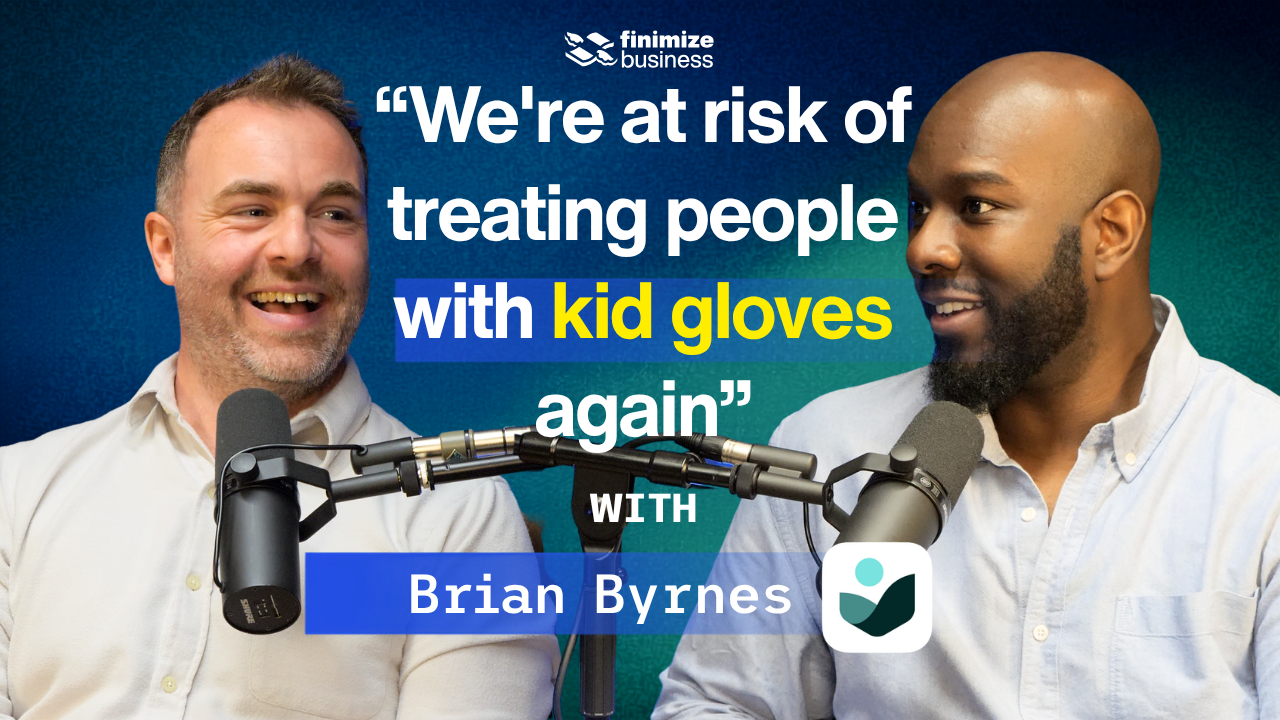
Where I'm standing on an island is on the tax changes in stocks and shares ISAs — I don't think that's as big a negative as people claim, that point on complexity. I think we're at risk of treating people with kid gloves, saying "you don't understand that this bit of money might get taxed" – people can wrap their heads around this. They don't want to, no one wants to spend time thinking about tax, and the mental load is unfortunate – but I don't think "no one's going to get this, and therefore they're going to switch off" is necessarily true.
Brian: But the point is, we haven't had to have those conversations with people for the last 25 years. One of the major benefits of the stocks and shares ISA – which is an absolutely brilliant product, there's nothing else out there like it internationally, in terms of the allowance you get and how simple it is – is that providers like Moneybox, and everybody else, for the last 25 years, when it was originally PEPs and then moved on to stocks and shares ISAs, have just been able to say, "look, this is a great way of tax-free investing for the future." We can't say that any more from April 2027. We'll have to say, "if you leave your money in cash for a period of time, you're going to get a 22% charge; don't hold too much in money market funds, because those assets will become non-qualifying; by the way, you can't transfer out of a stocks and shares ISA into a Cash ISA." So you have all of these additional restrictions we'll have to explain to customers, and none of those exist on the Cash ISA product – that remains simple, no restrictions whatsoever. And we're trying to encourage people to use the stocks and shares ISA while making it more complex. That's the issue, from a behavioural perspective, that I really struggle with.
Carl: I see the argument – I hope I'm right. Let's see in a year; I'll owe you a pound, or a pint, if I'm wrong.
Brian: The point we've made to the government on this is: you could take one tax year – take 27/28, see what people are actually doing with these wrappers, the Cash ISA and stocks and shares ISA wrapper, when the £12k allowance comes in – and then build these measures, which are coined "anti-circumvention measures," in from April 2028, based on actual behavioural data. Instead they're bringing in all of this complexity based on things they don't even know will happen.
Carl: Anticipated loopholes.
Brian: Exactly, anticipated loopholes. 100% agree. That's our view: just delay this for one year and base it on actual behavioural data.
Carl: I think that's fair.
Brian: Yeah.
Carl: First-time buyers: I think we probably agree here, but maybe there's some work to be done on that ISA product. What do you think?
Brian: Yeah. So, just for a bit of context, Moneybox has the largest community of aspiring first-time buyers in the UK. Over the last ten years we've helped 200,000 people onto the property ladder, getting the keys to their first home. In 2025 alone, one person every ten minutes using a Moneybox Lifetime ISA got the keys to their first home. Sometimes these figures can hide the human side of things, but these are people getting onto the property ladder, getting that financial security of owning their home — and that follows you through life. When you come to the Pensions Commission side of things, people who own their own home in retirement, their pension lasts 13 years longer than people who are renting in retirement. So the benefit of people getting onto the property ladder in their 20s and 30s follows them through life, and it's a massive societal advantage.
From a Moneybox perspective, most people have done that using the Lifetime ISA, which in some circles is a much-maligned product – but it's not much-maligned by the people who actually use it. The people who use the Lifetime ISA absolutely love it.
Carl: Yeah.
Brian: From a net promoter score – the way financial services rate themselves – it's more popular as a product, or a brand, than John Lewis in the UK. People who use it absolutely love it – why wouldn't you, when you get £1,000 free from the government, paid monthly into your account, which is a huge behavioural bonus.
Now, it's not perfect, and we've been campaigning for some changes over the last three or four years. The house price cap, £450,000 – that remaining static doesn't make sense to anyone. Whenever you talk to government or Treasury and say, "should it be £450,000 for the next 30 years?", they say, "no, of course it shouldn't" – but we have no mechanism right now of getting that changed.
The withdrawal penalty is a more interesting, more balanced one. The way it works now – I'm sure your listeners are familiar – if you pay into the Lifetime ISA, you get a 25% bonus. If you take money out for any reason other than purchasing your first home or for retirement, you get a 25% penalty. But the way that maths works, you actually lose 6.25% of your own money – you don't just lose the government bonus, you lose a bit of your own money too, which is absolutely not ideal. Again, we've been campaigning to reduce that, so you just lose the government bonus. On the flip side, we have customers telling us that withdrawal penalty helps them be consistent with their savings – they say, "I want to put this in, I don't want to have access to it on a day-to-day, week-to-week basis, this is my long-term money." So I think that withdrawal penalty side of things is a bit more nuanced than some of the press coverage would suggest.
So that's where we are today. Now the government has just launched a consultation on another new product – we originally had the Help to Buy ISA, then the Lifetime ISA, and now they're proposing a First Time Buyer ISA.
Carl: Okay.
Brian: The details in that consultation are incredibly scant. There's no detail on how much you can pay in, no detail on what the bonus will be. There's a suggestion there might be a lifetime cap, and no detail on what the house price cap will be for that new product. The only detail that's really in there — and this is what's driving it from a government perspective — is that you won't get the bonus on a monthly basis, you'll get it at the end, when you come to purchase your home, which is back to where we were with the Help to Buy...
Carl: Yes.
Brian: ...ISA. Now, our major point – and I had to go and do something called the Treasury Select Committee inquiry on the Lifetime ISA a couple of years ago, sitting in front of 12 MPs while they grill you, which was absolutely terrifying – we made the point that, look, it's getting people onto the property ladder, it's helping people save for retirement, but the primary thing we were saying was that because of the monthly bonus, the Lifetime ISA gets people into incredible saving and investing habits that stick with them for life. When the monthly bonus is paid out, we see people logging into the app, topping up their accounts, and that's behaviour that stays with them. 84% of Lifetime ISA savers say they've become more consistent with their saving and investing habits because of this product. So paying the bonus at the end, on the new product, is throwing the baby out with the bathwater. I could rant on this for a while, but this new product isn't the solution to the minor fixes that are needed for the Lifetime ISA.
Carl: Technically, you might say the government is trying to optimise its cash flow, and will shoot itself in the – well, both feet and the kneecaps – in order to do so.
Brian: We all know there's pressure on the public finances. I think there's a concern that if they did something on the house price cap or the withdrawal penalty with the existing Lifetime ISA, it would make it more expensive for Treasury going forward. Current expenditure on the Lifetime ISA is about £600 million a year, which to you and me is a huge amount of money, but from a government perspective is a rounding error against their budget – when you consider around £45 billion is spent on the pensions triple lock, for example. £600 million for younger people getting onto the property ladder – and Moneybox research has proven that for every pound the Treasury spends on the Lifetime ISA, they get £1.45 straight back into the coffers. For example, somebody buying a first-time property in the £400,000 to £450,000 region with a Lifetime ISA typically gets an average bonus of about £2,300 — they basically pay the same amount straight back in stamp duty. So the money comes straight back into the Treasury. There's a lot of pressure on public finances at the moment, but in terms of how we spend our money, the Lifetime ISA is incredible value for money for the government.
Carl: Okay, let's put our soapboxes away. We've gone this entire conversation without mentioning AI.
Brian: Yeah.
Carl: And now I've done it. We have fresh data that shows 41% of investors use AI at least weekly, for research and advice. I know Moneybox has dipped its toe into the AI space, you've got a new product there. Maybe in the first instance, let's just level-set everyone: what's Moneybox's approach to AI? How are you thinking about it?
Brian: So if we talk about AI from a general-purpose perspective – any of the general-purpose large language models, ChatGPT, Claude, whatever it might be – turning to those services to answer personal finance or advice questions. I think there's a lot of positives to that. We've had an advice gap in this country for far too long; far too few people can get access to financial advice. There's also some really good behavioural stuff to those general-purpose LLMs – you can ask a question at 11pm on a Tuesday night, sat on your couch, and get a reasonable-sounding, confident, often correct answer. There's also no judgment to it whatsoever. I think it's a very interesting thing that one of the primary use cases for these LLM tools is also for medical questions people are too embarrassed to ask their doctor – they'll ask something that has no judgment, that's impersonal. I saw that in my experience as an adviser too — people would turn up to meetings really worried about being judged for what they were doing with their finances, and none of that exists with these products. So there's a lot of positives to them.
I think when you talk about financial advice and personal finance specifically, there are some drawbacks too. There's no consumer protection whatsoever. If you turn up to ChatGPT or Claude and ask for something, and it gives you something that looks a lot like financial advice – some of them have more disclaimers than others – if something goes wrong with that, you have no protection whatsoever. There are a lot of surveys out there saying customers don't realise they have no protection – they feel like they can turn up to the FCA, the Financial Ombudsman, whatever it might be, and say "look, I got something that looked like financial advice and it turned out to be wrong or terrible," and there's no protection whatsoever.
So what we, as an industry, need to do – and what Moneybox is trying to do – is balance that off. We're trying to build AI-powered financial guidance, and potentially financial advice in the future, where customers can rely on that from Moneybox and get full consumer protection as well. At the back end of last year, we launched our Aurora platform, a human-expert-led, AI-powered financial guidance platform, which gives you a personalised financial plan, step by step: here's what you should do with your money. And, as I say, it's coming from Moneybox – we're a regulated FCA entity, full consumer protection – so we're trying to balance that playing field between a completely unregulated LLM offering financial advice, and hopefully people turning up to Moneybox for it instead.
Carl: So, just help me understand... as a Moneybox customer, if only a portion of my cash is in Moneybox accounts, do you have a way to see across all my other investment accounts and my cash position, to give that advice? How does it work?
Brian: We'd be able to view what you have on the Moneybox platform, and then we'd be able to ask you further questions about what else you might have out there. As I say, at the moment it's guidance; financial education, helping you make your own decisions in a more educated and confident way. I think in the future – this is our first step into this world – it's likely we'll look at this from an advice perspective going forward, and just give you a personal recommendation. Again, that will probably start with what you've got on the Moneybox platform, but then get more holistic over time.
Carl: Cool, looking forward to that. Brian, before I let you go, one final question: what's the most ridiculous or entertaining story you've seen in the financial news or services space over the last few weeks?
Brian: I'll go with ridiculous.
Carl: Oh, perfect.
Brian: And I'll go with a theme, one that really frustrates me. Every time you're reading the financial press about what's going on, there's a recurring theme of "we live in incredibly uncertain times, more uncertain than ever before." Do we know how we even measure that against decades gone past? Despite my personal appearance, I wasn't actually around in the 70s, but I'd imagine inflation running at double digits, interest rates running at double digits, was pretty terrifying. You get into the 80s and you have things like Black Monday, where the stock market fell off a cliff in one day. You get into the dot-com crisis, the global financial crisis – which I was around for, and I was advising, and it was terrifying. Then you get into things like Brexit and COVID. Even from a geopolitical perspective, going back to the 70s, I'd imagine the Cuban Missile Crisis was pretty terrifying.
Carl: Yeah.
Brian: But the thing that was different back then is how people consumed their news. You might watch the news once a day, or pick up a newspaper.
Carl: Currently, it's completely 24/7. Livestreamed on your phone, directly into your face, directly into your eyeballs. If you were trying to avoid it, you couldn't possibly do it.
Brian: And we're constantly told things are more uncertain than ever, more volatile than ever, whereas I just don't think that's the case – and this has a real-world impact on people taking that first step into investing. When we talk to our customers, I think 53% of people who said they were worried about investing cited economic uncertainty and geopolitics, which is valid, given how that gets rammed into our eyeballs 24/7. But you look at investment returns for the last two or three years – it's been incredibly positive. These two things are unrelated, but it definitely doesn't help people become more confident about their personal finances, their wealth, about taking that step to invest, when we're constantly told we're living in more uncertain and volatile times than ever. So I find that ridiculous every time I see it.
Carl: I'm completely with you. I used to have an old joke that whenever someone says "in these troubled times," I'd take a shot — that's now got to evolve to "unprecedented uncertainty," drink.
Brian: Yeah – by the bottle. And I have a fairly strong belief that the way most people should invest has, broadly speaking, been solved: low-cost, diversified, stay invested for the long term. Of course people can be more engaged if they want to –º they can pick individual stocks if that's something they're passionate about – but for most people, long-term, low-cost, diversified is the answer. That doesn't fit with the world we live in today, where it's all about action, all about 24/7 news – you should be doing this, you should be doing that. That's the constant battle we have, and it's something we actively try to fight against at Moneybox. We say: investing and wealth building is a long-term practice, a habit to get into, rather than something to react to day in, day out, based on the news cycle.
Carl: Brian, Director of Personal Finance at Moneybox... absolute rock star. I've loved every second of this. Thank you so much for joining Retail Investors Decoded.
Brian: I've loved it as well. Thank you very much for having me.
Carl: Awesome. See you all next time.